

Development of VR simulators for occupational safety
Unique offer
Fire safety —
response drills for a fire, evacuation, use of primary fire-extinguishing equipment.
Electrical safety —
live work, de-energising, releasing a victim, first aid.
Work at height —
safety-line techniques, PPE use, conduct on roofs, platforms and scaffolding.
Emergencies and evacuation —
accident scenarios, smoke, depressurisation, actions per site protocol.
VR certification —
employee action logging, checklist scoring, automatic result export to LMS.
Haptic feedback —
integration with haptic vests and controllers for realistic response.
Why choose us:
Expertise in occupational safety VR simulators and industrial safety.
We use modern engines (Unity, Godot).
Customisation to client and audience needs.
Fast prototype and MVP launch.
Support and updates after release.
Strict quality control and risk mitigation.
How we work:
Consultation and analysis
We define scenarios, regulatory requirements, audience and budget.
Scenario development
A methodologist and safety engineer describe steps and scoring criteria.
3D content
Realistic models of workshops, warehouses, substations; behaviour of fire, smoke, electricity.
Development
We program logic, integrate haptic devices and sound design.
Testing and pilot
Pilot with 20–50 employees, motion-sickness checks, difficulty tuning.
Support
Trainer onboarding, certification sessions, SLA support.
Benefits of cooperation:
- Experienced VR developers with industrial-safety projects.
- Flexible engagement models: from single tasks to long-term support.
- Transparency in stages, timeline and budget.
- Cost optimisation through experience and proven solutions.
- Constant feedback and progress demonstration.
Cases
VR emergency-response training
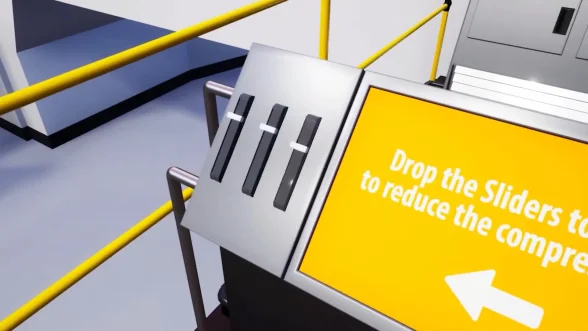
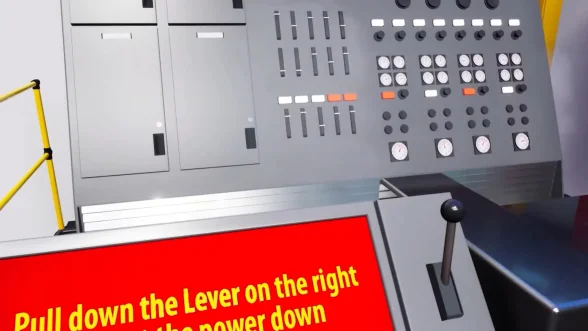
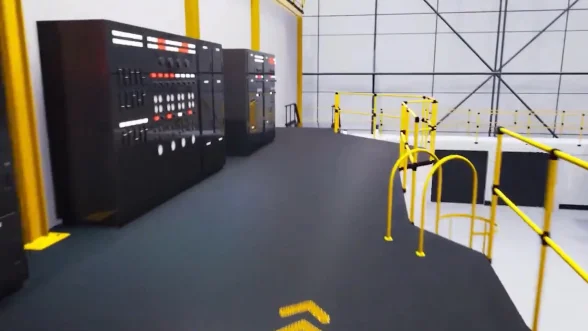
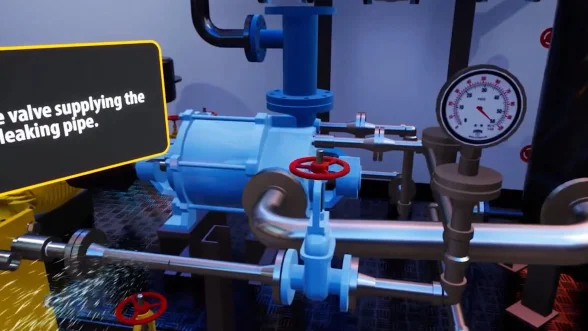
Simulation of an off-normal event — a pressure drop in the cooling system. The trainee receives an alarm, follows the procedure, ascends to the second level of the facility and adjusts compressor parameters on the control panel, practicing the correct action algorithm for the incident.
Type: VR simulator for emergency-response drills
Platform: Unity
VR simulator for staff training
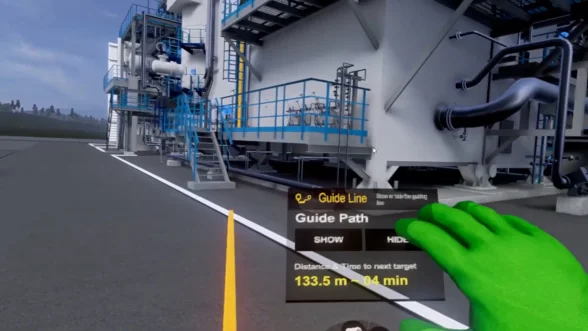
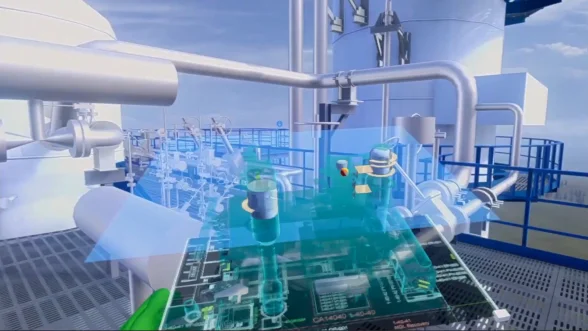
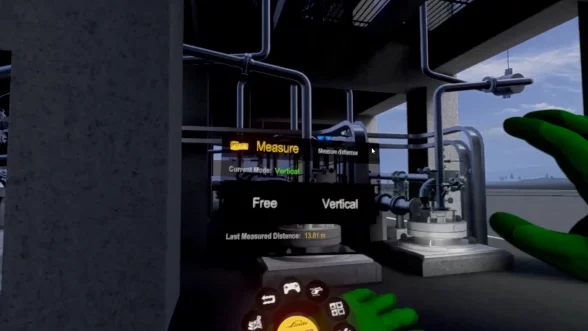
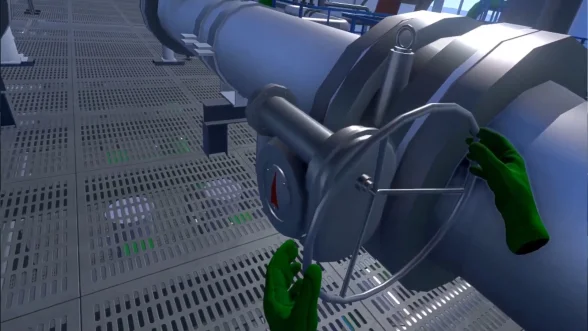
Virtual replica of a real production facility for safe employee training. The user explores equipment (including a demethanizer), receives technical data via information panels, performs measurements with virtual tools and practices handling shut-off valves.
Type: VR simulator for industrial training
Platform: Unity
Additional examples
— training VR scenarios
AR visualization of engineering utilities
Augmented reality for a construction site: an accurate 3D layout of future engineering utilities is overlaid in real time onto the real interior of a building under construction. An adjacent direction to safety VR simulators — visualization of industrial facilities and utilities for risk assessment.
Type: AR solution for construction and engineering projects
Platform: Unity

Download presentation
All our services, cases and approach — in one PDF document.
F.A.Q.
Does the simulator conform to occupational-safety standards?
Scenarios are built from the client’s regulatory documents: GOST, industry rules, internal protocols.
Does VR certification have legal status?
We export completion records to the client’s LMS/HRIS. Legal status depends on the company’s internal regulations.
What about haptic devices?
We support haptic vests (bHaptics and similar) for tactile feedback. On request — smoke-imitation modules.
How long is a scenario?
5–15 minutes per branch. Per shift an employee runs 3–5 scenarios with scoring.
Can we create scenarios ourselves?
Yes, we provide a CMS and train in-house methodologists. Or we develop scenarios on request.
What about NDA?
All projects under NDA. Scenarios and results are hosted on the client’s side or in a private environment.